12 Essential B2B Marketing Strategies to Grow Your Business
For some businesses, B2B marketing is still primarily limited to sales calls, cold emails, referrals, and direct outreach. These methods are still relevant today. However, the way people make purchasing decisions has changed.
Your potential customer can find your business on Google, read multiple articles, visit your website, compare you with other businesses, and read reviews—all without ever speaking to your sales team.
This is something we see often when working on SEO, websites, and digital marketing campaigns. Businesses may have a good service, but if buyers cannot find enough useful information about them, they can easily move on to another option.
Therefore, the goal of B2B marketing is no longer just to grab attention. Its purpose is to be helpful during the research process and to build enough trust to encourage people to take the next step.
There are plenty of tactics you can use. But not all of them need to be used at once.
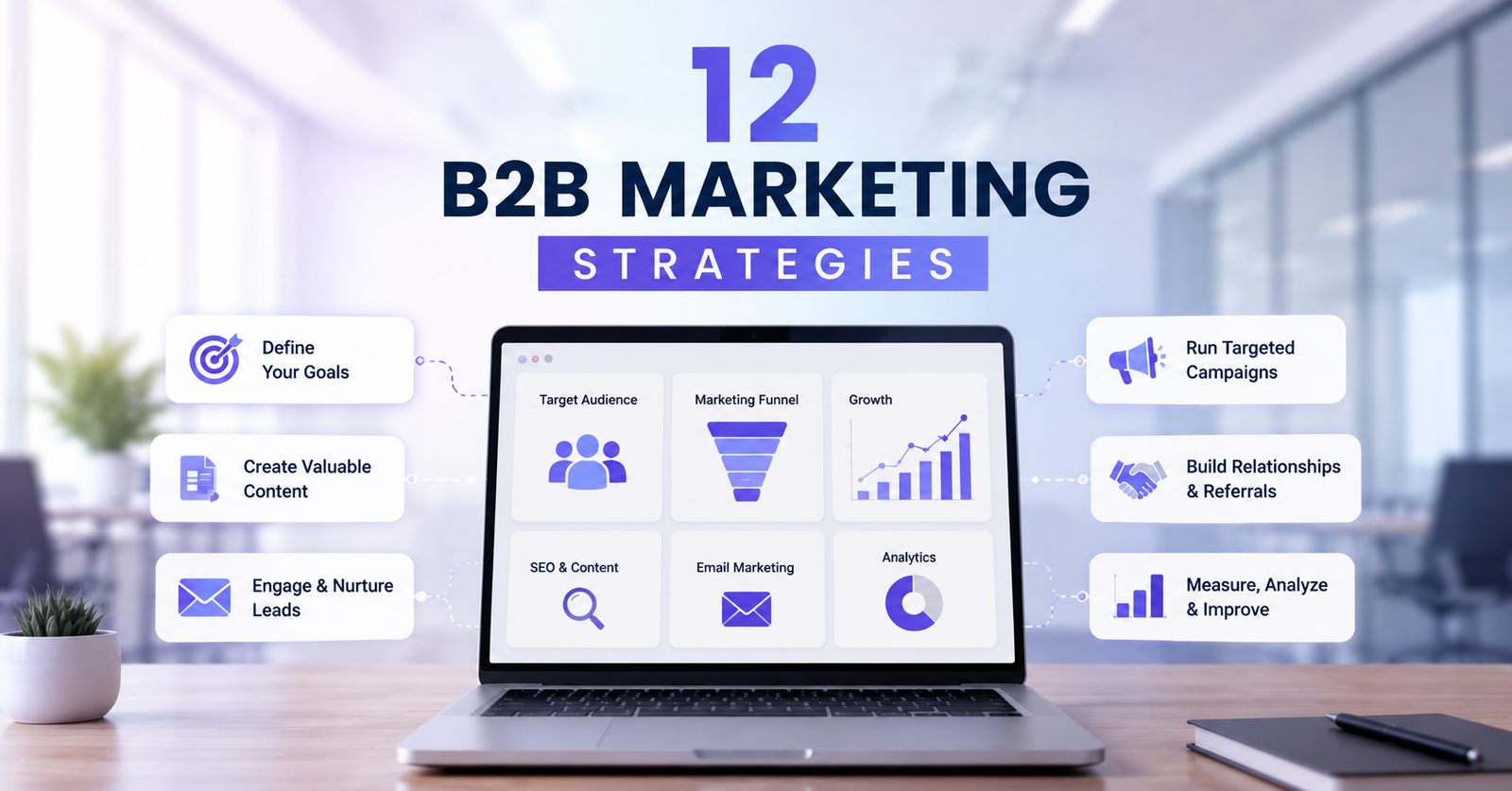
Here are 12 B2B marketing strategies worth considering.
What Is a B2B Marketing Strategy?
A B2B marketing strategy is a plan to reach other businesses and convert interested prospects into customers.
The process is usually more involved than a typical consumer purchase. There may be several people involved in the decision, a larger budget to consider, and quite a bit of research before a company decides to move forward.
That means your marketing needs to work at different stages of the buyer journey.
Someone may first discover your company through a blog post. Later, they might look at your service pages, compare your offer with competitors, and finally contact your sales team.
A good strategy takes all of these steps into account.
1. Start With Market Research
Before deciding what your marketing should look like, understand the market you are trying to reach.
Look at your current customers and try to understand why they chose your business. What problem were they trying to solve? What made them trust you? What nearly stopped them from buying? Your competitors can provide useful clues too.
Look at the services they promote, the topics they write about, the questions they answer, and the gaps you notice in their content.
Your sales team is another useful source of information. If prospects keep asking the same questions during sales calls, there is probably a content opportunity there.
Research gives you something much better than guesswork.
2. Choose a Clear Niche
It is tempting to say that your business can help everyone. In fact, this can make your marketing difficult.
If a company tries to appeal to all types of customers, it has to rely on very generic messaging. A specialized business, however, can address specific challenges and demonstrate a better understanding of its customers.
For instance, a digital agency might claim to work with all kinds of companies, yet it could build expertise in areas like website development, paid advertising, and/or SEO specifically for B2B companies.
The second approach gives potential customers a clearer idea of what the business is known for.
You do not necessarily have to turn away every customer outside your niche. The point is to make your main audience clear.
3. Build a Website That Supports the Buying Process
Your website has to do more than look professional. For many B2B buyers, it is one of the first places they go when researching a company. They want to know what you offer, who you work with, whether you understand their problem, and what they should do next.
Your service pages should answer those questions without making visitors dig through the site. Useful content, case studies, client reviews, clear contact options, and information about your experience can also help build trust.
There is a practical side to this as well. If pages take too long to load or the site is difficult to use on mobile, people may simply leave.
A good website should make the next step easier, not harder.
4. Invest in B2B SEO
Your potential customers are already searching for information. The question is whether they find your business when they search.
A B2B SEO strategy should start with the searches your audience actually makes. Some will have clear buying intent, while others will be researching a problem and may not be ready to contact a company yet.
For that reason, SEO is not just about putting keywords into service pages.
You need to understand search intent, create useful content, organise the website properly, build relevant internal links, and take care of the technical side of SEO.
Search behaviour is changing too. People are increasingly using AI tools alongside traditional search to research products, services, and companies.
Clear, well-written information becomes even more valuable in that environment.
5. Create Content Around Real Problems
There is a difference between creating content because you need to “publish a blog” and creating something because your audience genuinely needs the information.
The second approach tends to be more useful. Start with questions your customers actually ask.
If prospects do not understand your pricing, explain what affects the cost. If they are comparing two solutions, write a useful comparison. If they keep making the same mistake, explain how to avoid it.
This is where B2B content marketing can support the rest of your strategy.
You are not simply trying to fill a blog section. You are building a library of information that can help people while they are making a decision.
For a broader look at how different channels fit together, you can also explore our guide to different types of marketing strategies.
6. Use Social Media to Stay Visible
B2B companies sometimes treat social media as an afterthought.
That is understandable. If you sell software, consulting, manufacturing services, or another business solution, posting every day may not seem like a priority.
But your buyers are still people. They read posts, follow industry discussions, ask questions, and pay attention to companies that consistently share useful information.
You do not need to advertise in every post.
Share something you learned from a project. Explain an industry change. Talk about a problem customers often face. Share an opinion when you have something worthwhile to say.
The goal is not to make every post generate a lead. Sometimes the value is simply being remembered.
7. Use Paid Advertising Carefully
Paid advertising can help when you want to reach potential customers sooner.
Google Ads can be particularly useful when someone is already searching for a service or solution. Social advertising can help you reach a specific audience or bring previous website visitors back to your site. But there is a common mistake here. Businesses sometimes focus too heavily on clicks.
A campaign can generate plenty of traffic and still produce very few useful enquiries. That is why the quality of the search terms, audience targeting, landing page, offer, and follow-up process matters.
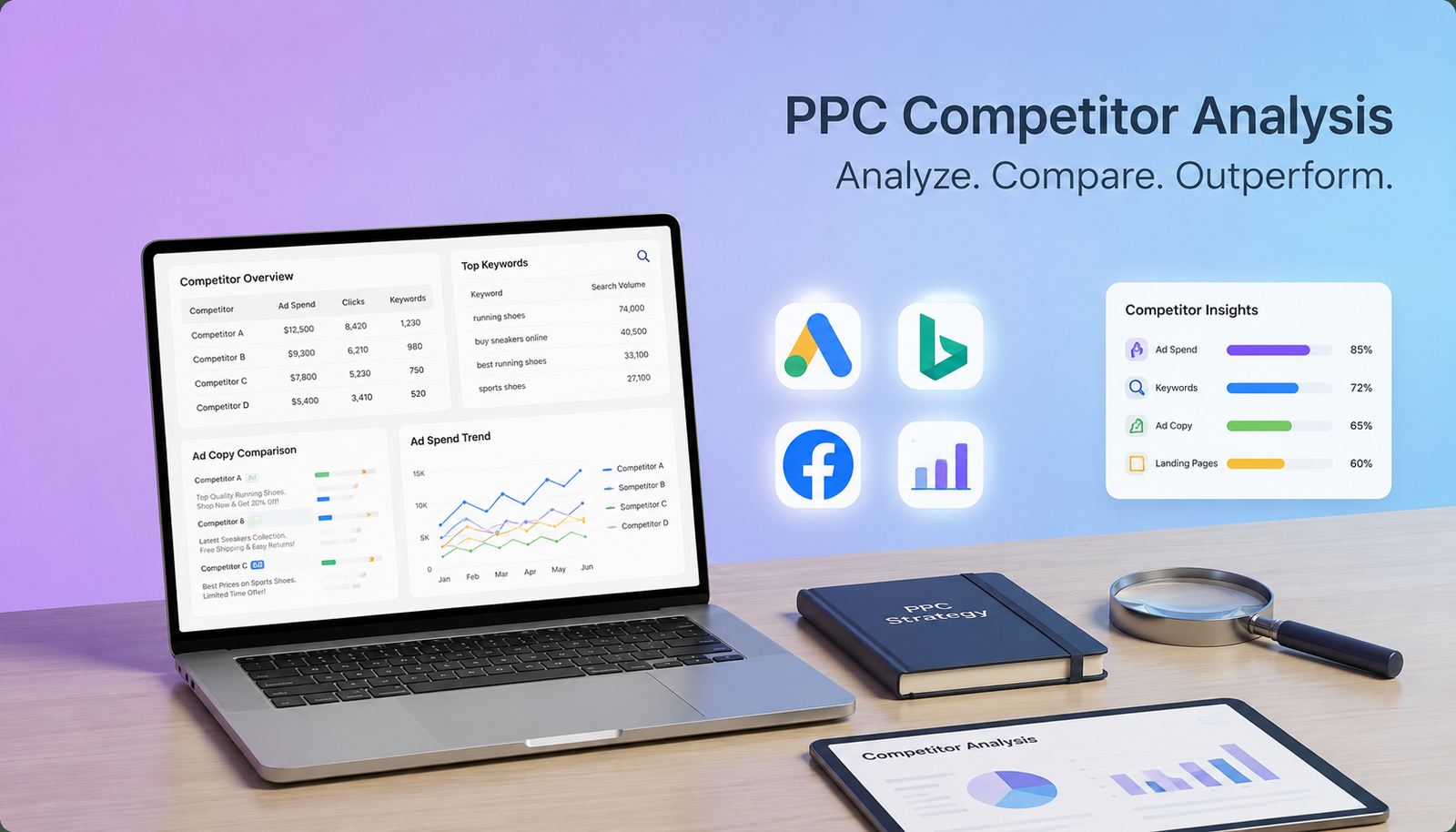
If you are comparing paid search with organic visibility, our guide on Google Ads vs SEO looks at how the two approaches differ and where each can fit.
8. Make Referrals Easier
Referrals have always been valuable in B2B. When someone recommends a company they have worked with, the new prospect starts with a certain level of trust.
Obviously, customers are a great source of referrals, but that’s not the only one. Others in your business circle, such as partners, consultants, suppliers and others, can also introduce you to new customers.
The important part is your reputation. People have to know what you’re good at before they can recommend you. If you’re not specific, they will not know who to route you.
Do not do bad work; be useful; make something easy to understand.
9. Keep Leads Warm With Email
A lead is not always ready when they first contact you. Maybe they are still comparing providers. Maybe they need approval from someone else. Or perhaps they are interested, but the project is not starting for another few months.
This is where email marketing can help.
Instead of sending promotional messages every few days, give prospects something useful. Share relevant articles, guides, case studies, or information related to the problem they were looking to solve.
The aim is simple: stay relevant without becoming annoying. When the timing is right, you want your business to be one of the companies they remember.
10. Bring Marketing and Sales Together With a CRM
Managing a few leads manually is possible. Managing hundreds is another matter.
A CRM can help to keep prospect information, conversations, follow-up, and sales activity organized. All of this means that marketing automation can handle some repetitive duties as well, like sending follow-up emails or segmenting leads according to their interests.
However, using technology to solve a marketing problem will not do the trick.
Don’t automate anything before knowing the process makes sense. Understand the consequences of completing a form, downloading a resource, requesting a quote, or not responding.
Good systems would make it easier for the marketing and sales teams to get a better understanding of what happens with each lead.
11. Test Instead of Assuming
You may think a particular headline will work better. You may be wrong.
The same applies to landing pages, advertisements, email subject lines, forms, and calls to action. Testing gives you a chance to see what your audience actually responds to.
Sometimes the change is surprisingly small. A shorter form may bring more inquiries. A clearer offer may improve conversions. One advertising message may bring better leads than another.
You do not have to change everything at once. Test one thing, look at the result, and use what you learn.
12. Measure What Leads to Revenue
Website traffic is useful. But traffic is not the final goal.
For a B2B business, you also want to know how many visitors become leads, how many of those leads are qualified, how many turn into sales opportunities, and how much revenue eventually comes from them.
This changes the way you look at marketing.
A campaign that generates 500 leads may sound impressive. But if most of those leads are irrelevant, the number does not mean much.
Another campaign might generate only 50 leads, but if ten become customers, it could be much more valuable.
This is why marketing reporting should be connected to business results.
Choosing the Right B2B Marketing Strategies
You don’t have to use all 12 strategies. Check to see where the largest issue is currently.
If you have very little awareness of your business, social media, content marketing, paid advertising, and SEO might be priorities.
In cases where you already receive a high amount of traffic on your website and not so many inquiries, this could be a problem with your website, landing pages, messages, or your conversion process.
If you’re getting leads in and not closing them, then consider your lead quality, follow-up, and the handoff from marketing to sales.
The right B2B marketing plans are contingent on your position.
Common B2B Marketing Mistakes
One common mistake is trying to target everyone.
Another is producing content without knowing what the audience actually needs. Some businesses also focus heavily on traffic while ignoring whether that traffic produces qualified leads or customers.
And marketing should not work separately from sales. The questions sales teams hear every day can provide some of the best ideas for content and lead nurturing.
Final Thoughts
There is no magic formula for B2B marketing. What works for one business may not work in the same way for another.
The better approach is to understand your market first, choose the channels that make sense for your audience, and give people useful information throughout the buying process.
SEO can help people find you.
Content can help them understand you. Your website can build confidence. Email can keep you in the conversation, while paid advertising can help you reach the right people sooner.
Then measure what happens.
If you are looking for help with SEO, Google Ads, social media, email marketing, or website development, India Digital Agency works across these areas to help businesses build a more connected digital marketing strategy.
FAQs
About India Digital Agency
India Digital Agency is a digital marketing and web development agency in India offering SEO, Google Ads, social media marketing, email marketing, and website development services.
The agency works with businesses on both individual marketing channels and wider digital marketing strategies, with a focus on improving visibility, generating relevant leads, and building websites that support business growth.