Skip to content
Advantages and Disadvantages of Social Media in 2026
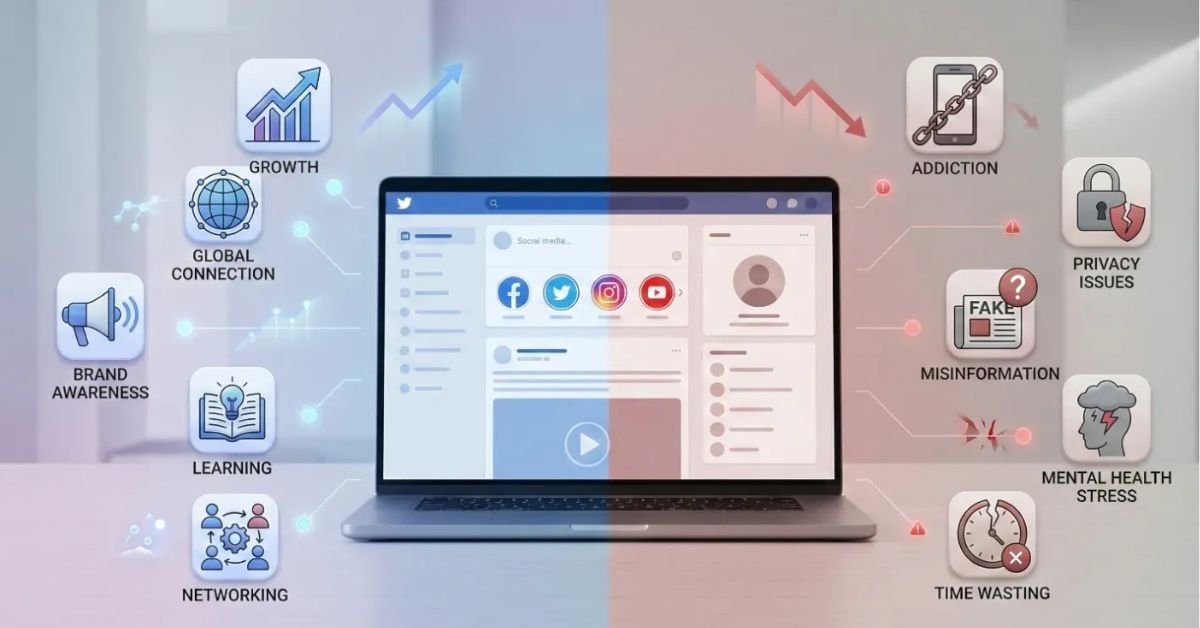
Social media in 2026 is no longer just about scrolling, posting selfies, or killing time. It has become infrastructure for communication, business growth, branding, education, hiring, and even public opinion.
Ignoring social media today doesn’t make you “focused”. It makes you invisible.
At the same time, pretending that social media is only beneficial is naive. Platforms are more addictive, more algorithm-driven, and more intrusive than ever. The benefits are massive, but so are the risks.
This blog breaks down what social media really is in 2026, why it matters more than ever, how it impacts industries, and the top 10 advantages and disadvantages of social media, with zero sugarcoating.
What Is Social Media?
Social media refers to digital platforms that allow users to create, share, consume, and interact with content and communities in real time.
In 2026, social media includes:
Why Social Media Is More Important in 2026
If you think social media peaked earlier, you’re wrong.
Here’s why it matters more in 2026:
AI-driven discovery
Algorithms now predict intent, not just interests. If your brand isn’t present, AI won’t recommend you.
Search behavior has shifted
Gen Z and Gen Alpha search on Instagram, TikTok, and YouTube before Google.
Trust is built socially
People trust creators and communities more than ads or corporate websites.
Low entry, high reach
Organic reach is harder but still cheaper than traditional media if done smartly.
Social commerce is normalized
Buying directly from social platforms is now expected, not optional.
How Social Media Is Affecting Different Industries
| Business & Startups |
|
|---|---|
| Education |
|
| Healthcare |
|
| Recruitment & HR |
|
| Entertainment & Media |
|
Top 10 Advantages and Disadvantages of Social Media
Social media is a tool, not a moral force. Used strategically, it can accelerate growth. Used blindly, it can destroy focus, mental health, and credibility.
Let’s break both sides properly.
10 Advantages of Social Media
1. Better Connection and Communication
Social media makes communication fast and accessible. People can send messages, make video calls, and share updates instantly, regardless of location. This has strengthened personal relationships and made professional collaboration easier.
2. Global Reach and Cultural Awareness
Users can connect with people from different countries and cultures. This exposure encourages cultural exchange, global thinking, and awareness of diverse perspectives that were previously limited by geography.
3. Cost-Effective Marketing for Businesses
Social media allows businesses to promote their products and services at a lower cost compared to traditional advertising. Even small businesses can reach targeted audiences through organic content and paid campaigns.
Digital Marketing Services
4. Learning and Skill Development
Educational content such as tutorials, webinars, industry insights, and how-to videos is widely available on social media. Students and professionals use platforms like YouTube and LinkedIn to gain new skills and stay updated.
5. Career Growth and Networking
Social media helps individuals build professional networks, showcase expertise, and discover job opportunities. LinkedIn, in particular, is a powerful platform for career development and professional visibility.
6. Brand Building and Personal Identity
Individuals, influencers, and companies can create a strong online presence. Consistent posting and engagement help build trust, credibility, and authority over time.
7. Real-Time News and Information
Social media provides instant access to news and trending topics. Users can stay informed about current events, industry updates, and global developments in real time.
8. Community Support and Awareness
Online communities provide emotional support, guidance, and shared experiences. Social media has helped raise awareness about social issues, health concerns, and environmental causes.
9. Customer Interaction and Feedback
Businesses can communicate directly with customers, respond to queries, and gather feedback. This improves customer experience and helps brands refine their offerings.
Social Media Management Services
10. Entertainment and Creative Expression
Social media is a major source of entertainment. It also allows creators to express ideas, showcase talent, and reach large audiences without traditional gatekeepers.
10 Disadvantages of Social Media
1. Addiction and Excessive Screen Time
Social media platforms are designed to keep users engaged. Overuse can lead to addiction, reduced productivity, and poor time management.
2. Negative Effects on Mental Health
Constant comparison, online validation, and unrealistic portrayals of life can cause anxiety, stress, and low self-esteem, especially among young users.
3. Spread of Fake News and Misinformation
False information spreads rapidly on social media. Without fact-checking, users may believe and share misleading content, which can have serious consequences.
4. Privacy and Data Security Risks
Social media platforms collect large amounts of personal data. This increases the risk of data breaches, identity theft, and misuse of personal information.
5. Cyberbullying and Online Harassment
Online anonymity often leads to abusive behavior. Cyberbullying can cause emotional harm and long-term psychological effects.
6. Reduced Face-to-Face Interaction
Excessive reliance on digital communication can weaken real-life social skills and reduce meaningful personal interactions.
7. Decreased Focus and Attention Span
Short-form content and constant notifications reduce concentration levels. This affects learning ability, deep thinking, and overall productivity.
8. Unrealistic Expectations and Lifestyle Pressure
Social media often shows edited and idealized lives. This creates unrealistic expectations and dissatisfaction with real life.
9. Damage to Personal or Brand Reputation
A single negative post, comment, or controversy can spread quickly and damage reputations. Once content goes viral, control becomes difficult.
10. Exposure to Harmful or Inappropriate Content
Without proper controls, users—especially children—may encounter inappropriate or harmful content that can influence behavior negatively.
How Businesses Can Leverage Social Media Wisely
Most businesses fail because they copy competitors instead of building a strategy.
Smart usage in 2026 means:
- Prioritizing value over virality
- Selecting platforms based on audience behavior
- Creating educational, problem-solving content
- Measuring conversions, not vanity metrics
- Integrating social media with SEO, email, and paid campaigns
- Building owned assets like email lists and communities
Social media should support your ecosystem, not be the ecosystem.
Future Social Media Trends
Expect these shifts:
- AI-assisted content creation is becoming standard
- Niche communities outperforming mass audiences
- Creator-led brands dominating trust
- Social platforms acting as primary search engines
- Increased regulation and content accountability
- More focus on authenticity over polish
Advantages and Disadvantages of Social Media at a Glance
| Advantages | Disadvantages |
|---|---|
| Better Connection and Communication | Addiction |
| Global Reach and Cultural Awareness | Negative Effects on Mental Health |
| Cost-Effective Marketing for Businesses | Spread of Fake News and Misinformation |
| Learning and Skill Development | Privacy and Data Security Risks |
| Career Growth and Networking | Cyberbullying and Online Harassment |
| Brand Building and Personal Identity | Reduced Face-to-Face Interaction |
| Real-Time News and Information | Decreased Focus and Attention Span |
| Community Support and Awareness | Unrealistic Expectations and Lifestyle Pressure |
| Customer Interaction and Feedback | Damage to Personal or Brand Reputation |
| Entertainment and Creative Expression | Exposure to Harmful or Inappropriate Content |
Conclusion
Social media is a powerful tool with both positive and negative impacts. When used wisely, it enhances communication, learning, and growth. When overused or misused, it can harm mental health, productivity, and relationships.
The key is balanced, intentional usage, not complete dependence and not complete avoidance.
For businesses, social media works best when combined with a strong digital marketing strategy rather than random posting.
If you’re looking for social media marketing or social media management services to grow your brand and effectively reach the right audience, you can connect with our team for a simple, results-focused approach.