Shopify vs WordPress: Which Platform Is Better for Your Business in 2026?
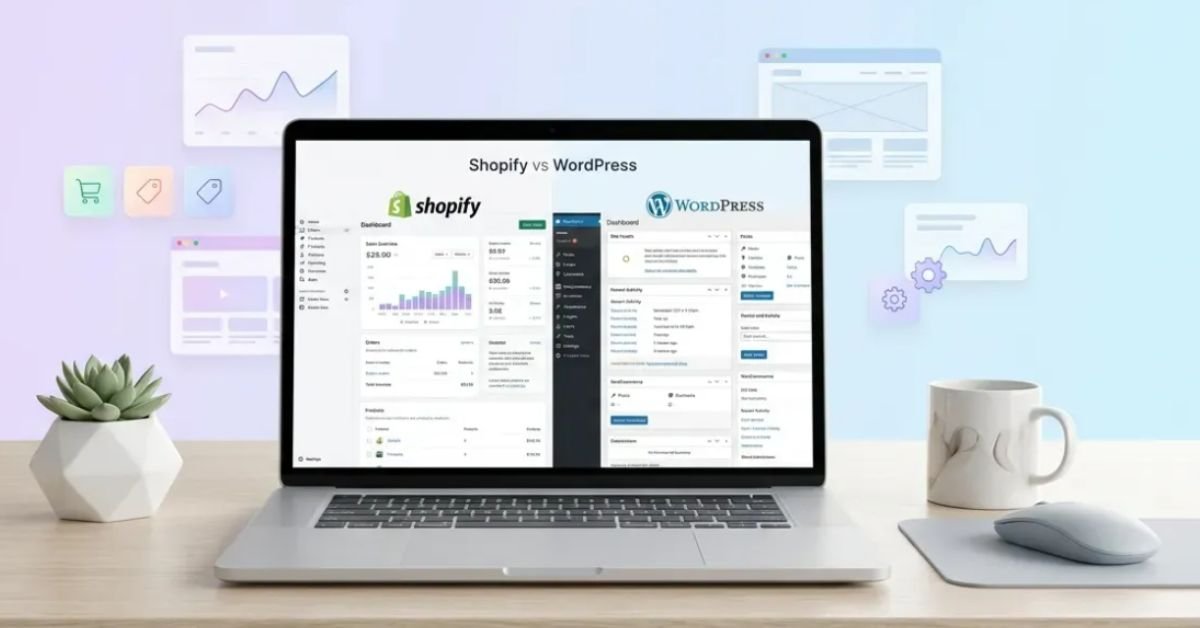
Choosing between Shopify vs WordPress is not just a technical decision, it is a business decision that directly impacts how fast you grow, how much you spend, and how easily customers find you on Google. Most business owners are influenced by what looks easy at first, only to struggle with limitations, rising costs, or weak SEO performance. Shopify promises simplicity and quick setup, while WordPress offers flexibility and long-term control, but the real difference only becomes clear when you look at your business goals, not just features. In this blog, you will not get surface-level comparisons. You will understand which platform actually supports your growth, where each one fails, and how to make a decision that saves you time, money, and effort in the long run.
At India Digital Agency, we work closely with businesses to build high-performing websites that are not just visually appealing but also designed to rank, convert, and scale. From WordPress development to Shopify development and result-driven SEO services, our approach is always based on what works in real-world scenarios, not assumptions. We focus on creating platforms that support long-term growth, not short-term convenience.
What is Shopify?
Shopify is a platform built for creating online stores. It gives you everything you need in one place. This includes hosting, design templates, payment setup, and order management. You do not need to install anything. You also do not need to manage aspects. This is why many beginners and small businesses prefer Shopify.
The platform is designed to make selling simple. You can add products. You can manage inventory. You can start accepting payments. You do not have to deal with backend complexity. However, advanced features depend on apps. Customization is limited compared to flexible systems.
What is WordPress?
WordPress is a content management system. It helps you build any type of website. This includes eCommerce stores using WooCommerce. Unlike Shopify, it is not limited to selling products. It is widely used for blogs. It is used for business websites. It is used for large-scale platforms. This is because it gives you control over design. It gives you control over structure. It gives you control over functionality.
With WordPress, you manage your hosting. You manage your setup. In return, you get flexibility. You can customize everything. This includes how your website looks. This includes how it performs in search engines. This makes it a strong choice for businesses. They want to grow through content. They want to grow through SEO. They want long-term scalability.
What is WordPress?
The difference between Shopify vs WordPress is not just about what they can do. It is about how much control you have over your business.
Shopify is like a package deal. Everything is already taken care of for you, like where your site’s hosted, the security, and the basic functions. You can get started right away without having to worry about the technical stuff, but you have to follow the rules of the platform. If you need something that Shopify does not allow, you usually have to use apps or pay for a solution.
WordPress is like a blank canvas. You get to set up your site, pick where it is hosted, and decide how everything works. It takes work at first, but it gives you the freedom to do what you want. You are not limited by what the platform says you can do. You can build your site exactly how your business needs it to be.
This is where a lot of business owners make a mistake. They only think about how easy it is to use and forget about what they will need later. Shopify is easy to start with. WordPress is better for your business in the long run.
Shopify vs WordPress: Ease of Use
When you compare Shopify vs WordPress, the first thing people usually think about is how easy they are to use. The truth is, most people make mistakes when they decide because they only think about how hard it is to get started, not about what happens later on.
Shopify: Built for simplicity
Shopify is for people who do not want to deal with setup stuff.
As soon as you sign up, everything is pretty much ready to go. You can pick a theme, add your products, and set up how you want to get paid, and your store is open for business. The dashboard is easy to look at. It is simple to figure out what to do, even if you have never made a website before.
This is why a lot of beginners and small business owners like Shopify. It makes things easier. Helps you get started fast.
The thing is, this simplicity comes with a downside. As your business grows, you might find yourself needing to use apps just to make small changes, which costs more money and limits what you can do.
WordPress: Takes Some Work. Gives You More Control
WordPress is not super hard to use, but it is not instant either.
You have to set up a place for your website to live, install WordPress, set up WooCommerce, and deal with plugins. If you are new to all this, it can be a lot to handle at first.
Once you get everything set up right, it gets a lot easier to manage your content, products, and pages. You are not stuck with one way of doing things. You can make your website look exactly how you want it to.
This is why businesses that invest in proper WordPress development do not struggle with usability after the initial setup.
Shopify vs WordPress: Design and Customization
Design is not just about how your website looks. It directly affects how users interact with your store, how long they stay, and whether they convert. This is where the difference between Shopify vs WordPress becomes very clear.
Shopify: Structured but Limited
Shopify offers a range of ready-made themes that are clean and optimized for e-commerce. You can customize colors, fonts, layouts, and basic elements without much effort. For many businesses, this is enough to get started.
The limitation starts when you want something beyond standard layouts.
- Deep customization often requires code
- Many features depend on third-party apps
- The theme structure restricts layout flexibility
This means your website may start to look similar to other Shopify stores unless you invest heavily in custom development.
WordPress: Full Design Freedom
WordPress gives you complete control over how your website looks and functions. Themes or predefined layouts do not restrict you. Whether you want a simple store or a complex website with multiple sections, you can build it without limitations.
- Fully customizable layouts
- Page builders and custom design options
- No restriction on structure or user flow
Shopify vs WordPress: Content Management
Content is not just an add-on. It is the foundation of organic traffic, brand authority, and long-term growth. This is where the gap between Shopify vs WordPress becomes impossible to ignore.
Shopify: Basic Content Capabilities
Shopify does include a blogging feature, but it is limited. You can create blog posts, add images, and publish content, but the structure is basic. Managing categories, internal linking, and content hierarchy is not very flexible. As your content grows, organizing and scaling it becomes difficult.
- Limited control over blog structure
- Basic categorization
- Restricted flexibility for large content strategies
This is fine if content is not your main focus. But if you plan to drive traffic through search, these limitations start to show.
WordPress: Built for Content at Scale
WordPress was created for content publishing, and that strength is still unmatched. You can create a complete content ecosystem:
- Blogs
- Category structures
- Landing pages
- Service pages
Everything can be organized in a way that supports both users and search engines.
- Advanced content structuring
- Better internal linking control
- Easy management of large content volumes
Shopify vs WordPress for SEO
On-Page SEO Control
On-page SEO includes elements like meta titles, descriptions, headings, and URLs.
Shopify allows you to edit basic SEO elements, but the control is limited when it comes to URL structure and deeper optimization. You often have to follow predefined formats.
WordPress gives you complete control over every page element. You can customize URLs, optimize content freely, and structure pages exactly the way search engines prefer.
This flexibility becomes important when you are targeting multiple keywords or building a large website.
Technical SEO Capabilities
Technical SEO is where the real gap starts to appear.
Shopify handles basic technical aspects like sitemap generation and security, which is helpful for beginners. But when it comes to advanced optimization, your control is restricted.
WordPress allows deeper optimization if set up correctly:
- Better control over site speed
- Advanced schema implementation
- Custom indexing rules
- Full access to backend configurations
Content and SEO Strategy
Content plays a major role in ranking, and this connects directly with your platform.
Shopify supports content, but it is not designed for large-scale content strategies. Managing blogs, categories, and internal linking becomes difficult as your content grows.
WordPress is built for this.
You can create a complete SEO structure:
- Blog clusters
- Keyword-focused pages
- Strong internal linking
- Content hierarchy
This gives search engines a clear understanding of your website, which improves rankings over time.
Shopify vs WordPress: Pricing
Shopify Pricing: Predictable but Expensive Over Time
Shopify follows a subscription-based model. You pay a fixed monthly fee to use the platform, and on top of that, you often pay for apps and additional features.
Typical costs include the following:
- Monthly subscription fee
- Paid themes if you want a better design
- App subscriptions for extra functionality
- Transaction fees depend on the payment method
At the beginning, this looks simple. But as your store grows, you start adding apps for SEO, marketing, design, and performance. Each app adds to your monthly cost. This is where Shopify becomes expensive without you realizing it.
WordPress Pricing: Flexible but Depends on Setup
WordPress does not follow a fixed pricing model. Your cost depends on how you build your website.
Common expenses include:
- Hosting
- Premium themes if required
- Plugins for added functionality
- Development or maintenance if you need support
The advantage here is control. You only pay for what you actually need, and many essential tools are available without recurring costs. Businesses that invest in proper WordPress development often optimize their setup in a way that keeps long-term costs under control.
What You Should Focus On
Instead of asking which is cheaper, ask:
- How much control do I want over my costs
- How much will I spend when I scale
Am I building for the short-term or the long-term
Shopify vs WordPress: Performance and Speed
Shopify: Optimized by Default
Shopify comes with built-in hosting and a managed infrastructure. That means your store is already optimized at a basic level without any extra effort.
- Fast loading out of the box
- Hosting handled by Shopify
- No need to manage servers or technical settings
This makes Shopify reliable for beginners. You don’t have to think about performance in the early stage. The limitation is control. You cannot fully customize how your site loads, and deeper optimization options are restricted. If your website becomes heavy or complex, improving speed beyond a certain point becomes difficult.
WordPress: Performance Depends on Setup
WordPress gives you full control over performance, but that also means responsibility.
Your website speed depends on:
- Hosting quality
- Theme structure
- Plugin usage
- Optimization techniques
If everything is set up properly, WordPress can be extremely fast. In many cases, it can outperform Shopify. If poorly managed, it can become slow and affect both user experience and SEO.
Shopify vs WordPress: eCommerce Features
Shopify: Built Purely for Selling
Shopify is designed with one clear focus: selling products online. From the moment you set up your store, most essential features are already in place. You can manage products, track inventory, process orders, and accept payments without adding much extra.
- Built-in product and inventory management
- Integrated payment gateways
- Smooth and optimized checkout process
- Easy order tracking and management
This makes Shopify efficient for businesses that want a straightforward selling system without customization complexity. The limitation appears when your requirements go beyond standard e-commerce.
- Advanced features often require paid apps
- Checkout customization is restricted
- Complex product structures can be difficult to manage
WordPress: Flexible eCommerce with WooCommerce
WordPress itself is not an eCommerce platform, but with WooCommerce, it becomes one of the most flexible selling systems available.
Instead of a fixed structure, you get a customizable setup.
- Full control over product pages and layouts
- Flexible payment and shipping integrations
- Ability to create custom workflows
- No restriction on how your store functions
This makes WordPress ideal for businesses that need more than a basic store.
If your store includes:
- Custom product types
- Subscription models
- Advanced pricing logic
- Integration with other systems
WordPress handles it better without forcing you into a predefined structure.
Shopify vs WordPress: Scalability
Shopify: Stable but Structured Growth
Shopify can handle growth in terms of traffic and orders without much effort. Since the infrastructure is managed, you do not have to worry about servers or performance when your store starts getting more visitors.
- Handles increasing traffic without manual intervention
- Reliable infrastructure for growing stores
- No need to manage hosting or backend scaling
This makes Shopify a safe choice for businesses that want predictable growth without technical involvement.
- Custom workflows are harder to implement
- Dependency on apps increases
- Flexibility reduces as complexity grows
WordPress: Scales with Your Business Needs
WordPress does not limit how your website can grow. It depends on how well your system is built and managed.
You can scale:
- Traffic with better hosting
- Functionality with custom development
- Content with structured architecture
- User experience with advanced customization
There are no platform-level restrictions. You are not forced into predefined workflows.
This is why businesses planning long-term expansion often invest in structured WordPress development from the beginning.
Shopify vs WordPress: Pros and Cons
| Pros of Shopify | Cons of Shopify |
|---|---|
| Easy to set up and manage, even without technical knowledge | Limited control over customization |
| Built-in hosting, security, and maintenance | Ongoing monthly costs increase with apps |
| Smooth and reliable checkout system | Restricted SEO flexibility compared to WordPress |
| Faster time to launch | Dependence on Shopify’s ecosystem |
| Pros of WordPress | Cons of WordPress |
|---|---|
| Complete control over design and functionality | Requires setup and technical understanding |
| Strong SEO capabilities and content management | Needs regular maintenance and updates |
| Flexible pricing based on your setup | Performance depends on hosting and configuration |
| Scales easily with business growth |
Common Mistakes to Avoid
Shopify vs WordPress – Which One Should You Choose?
Choose Shopify If Your Priority Is Speed and Simplicity
Go with WordPress if:
- You want full control over your website and its functionality
- Your strategy includes content, blogs, and organic traffic
- You need flexibility for custom pages, funnels, or integrations
- You want to optimize your website deeply for search engines
- You are planning for long-term scalability
Shopify works best when your priority is speed and simplicity, not deep customization.
Choose WordPress If You Are Building for Long-Term Growth
Choose WordPress if:
- You want full control over your website, design, and functionality
- You are serious about building long-term organic traffic through SEO
- Your business depends on content, blogs, or multiple landing pages
- You want flexibility to scale without platform limitations
- You are thinking beyond launch and focusing on growth
WordPress works best when your priority is control, scalability, and long-term ROI.
Conclusion:
The platform itself is not the problem. The strategy behind it is. At India Digital Agency, we work with businesses at different stages and help them choose the right platform based on their goals, not trends. Whether it is setting up a scalable store through WordPress development or launching quickly with Shopify development, the focus is always on building a system that supports growth.