How ‘People Also Search For’ Impacts SEO in 2026 – Complete Guide
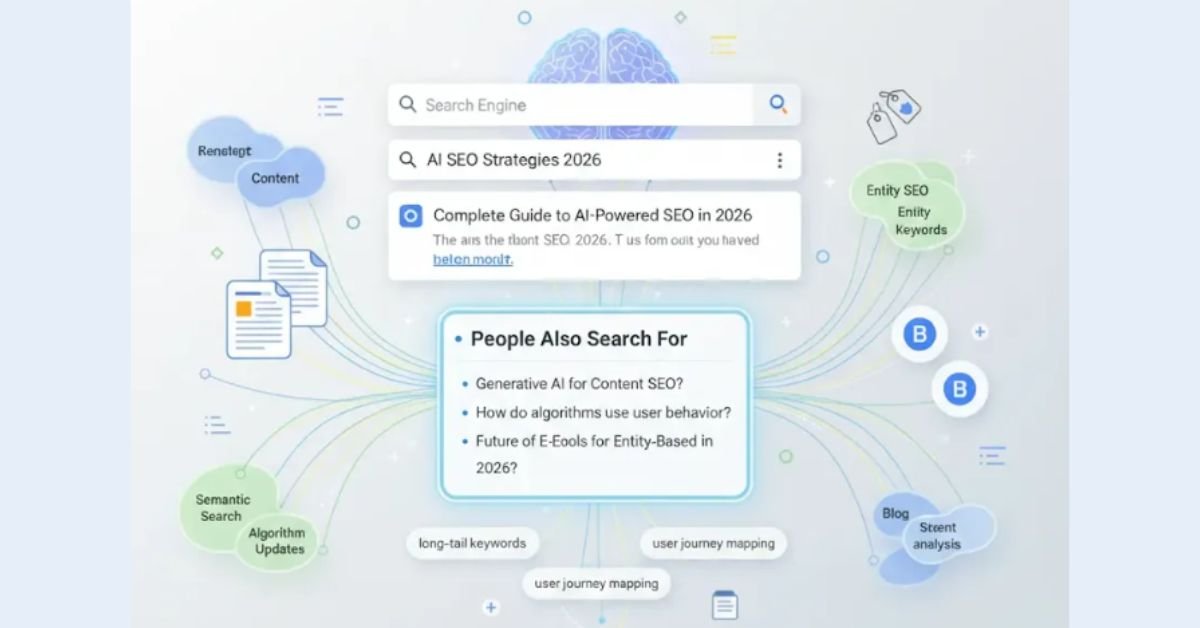
If you use Google regularly, you’ve likely seen the People Also Search For (PASF) feature. It’s part of Google’s evolving search layout that shows related queries when a search result doesn’t fully meet user intent. As SERPs become more dynamic with features like Featured Snippets, People Also Ask, and AI-powered results, organic clicks are getting harder to earn. However, when used correctly, People Also Search For offers valuable insights into user behavior and opens new opportunities to improve keyword research, content relevance, and SEO performance in 2026.
What Is ‘People Also Search For’ (PASF)?
People Also Search For (PASF) is a Google search feature that shows related search terms based on what users commonly look for next. In simple words, it helps Google guide users when their first search doesn’t fully answer their question.
If you’re wondering about the people also search for meaning, it refers to the additional queries users search after clicking a result and then returning to Google. PASF reflects real user behavior and shows what people actually want to know next.
Definition of People Also Search For
The PASF meaning is quite straightforward. When someone clicks on a search result, doesn’t find it helpful, and comes back to Google, Google displays a box called People Also Search For. This box contains related keywords or phrases that other users have searched for in similar situations.
PASF vs Autocomplete—What’s the Difference?
Many people confuse PASF with Google Autocomplete, but they work differently:
- Autocomplete appears as you type a query in the search bar and predicts what you might search for.
- PASF suggestions appear after you click a result and return to the search page, based on real user behavior.
Where the PASF Box Appears in Google Search
The People Also Search For box usually appears after a user clicks a result and then comes back to Google. It shows up below the original result they clicked or sometimes lower on the search results page.
PASF on Mobile vs Desktop
- On mobile devices, the PASF box is more noticeable and often appears immediately after returning to the search results.
- On desktop, it may appear slightly lower on the page or beneath a specific result.
In both cases, PASF is designed to help users refine their search and quickly find more relevant information.
How the ‘People Also Search For’ Box Works in Google
To understand how PASF works, it’s important to know that Google doesn’t show these suggestions randomly. The People Also Search For algorithm is largely based on how users interact with search results. Google observes search behavior and then suggests related queries that might better match the user’s intent.
User Behavior Signals Behind PASF
Google relies on several user behavior signals to decide which PASF suggestions to show.
Bounce-Back Searches
When a user clicks a search result and quickly returns to Google, it signals that the page may not have fully answered their query. This “bounce-back” action often triggers the People Also Search For box.
Query Refinement Behavior
After returning to Google, users often change or refine their search query. Google tracks these refined searches and uses them to suggest better or more specific queries in the PASF box.
Click-Stream Data
Google also analyzes clickstream data, which shows the sequence of searches users perform. If many users follow a similar search path, Google uses that data to display related PASF suggestions.
PASF vs Autocomplete vs Related Searches
Although they may look similar, PASF, Autocomplete, and Related Searches serve different purposes in Google Search.
| Feature | What It Is | When It Appears in SERPs |
| Autocomplete | Predicts queries while you type in the search bar | Before the search is submitted |
| People Also Search For (PASF) | Shows related searches based on user behavior | After clicking a result and returning to Google |
| Related Searches | Displays broader or similar search ideas | At the bottom of the search results page |
Why ‘People Also Search For’ Matters for SEO in 2026
The importance of People Also Search For has grown a lot in recent years. In 2026, SEO is no longer just about ranking for one keyword. Google now focuses more on user intent, context, and search behavior. This is where PASF becomes extremely valuable.
One of the biggest PASF SEO benefits is that it helps marketers understand what users are likely to search for next. Instead of guessing, PASF shows real follow-up searches based on how people actually use Google. As search results become more dynamic, PASF is now closely tied to major SEO trends in 2026.
Shift From Keywords to Search Journeys
SEO has clearly moved away from targeting isolated keywords. Today, Google looks at the entire search journey of a user.
Topic Clusters Over Single Keywords
Instead of writing one page for one keyword, successful websites now build topic clusters. PASF helps identify related terms and subtopics that should be covered within a single topic. This improves content depth and strengthens topical authority.
Search Intent Expansion
A single keyword can have multiple meanings or intentions. PASF helps expand search intent by showing related queries users commonly explore next. This allows content creators to answer multiple user needs in one piece of content, increasing relevance and engagement.
PASF as a Google Intent Validation Signal
Another key reason PASF matters is that it acts as an intent validation signal for Google.
Understanding What Users Actually Want
PASF data is based on real user actions, not assumptions. When Google displays PASF suggestions, it reflects what users really search for after clicking a result. This gives SEOs a clearer understanding of user expectations and pain points.
Content Relevance Scoring
Google uses these behavior signals to evaluate how relevant a page is. Content that naturally covers PASF-related topics is more likely to match user intent, which can improve engagement, dwell time, and overall relevance scoring.
People Also Search For vs People Also Ask (PASF vs PAA)
Many people confuse People Also Ask and People Also Search For, but they serve different purposes in Google Search. Understanding people also ask vs people also search for helps you decide how to structure content and which opportunities to target.
Differences Between PASF and PAA
Although both features show related queries, they work in very different ways.
Trigger Mechanism
- People Also Ask (PAA) appears automatically on the search results page when Google predicts that users may want quick answers to common questions.
- People Also Search For (PASF) appears after a user clicks a result and then comes back to Google, usually because the first page didn’t fully satisfy their search.
This means PAA is predictive, while PASF is reaction-based.
Content Type Differences
- PAA usually favors direct, concise answers, FAQs, and well-structured informational content.
- PASF supports broader topic coverage, follow-up searches, and content that expands on related ideas.
PAA is more about answering a single question, while PASF helps explore the topic further.
Which Is Better for SEO in 2026?
There’s no single winner—both play important roles in modern SEO.
When to Target PASF
You should focus on People Also Search For when:
- You’re building long-form or pillar content
- You want to cover multiple related subtopics
- Your goal is to improve topical authority and internal linking
- You’re optimizing for AI-driven and journey-based search
PASF is ideal for expanding content depth and matching real user behavior.
When to Prioritize PAA
You should prioritize People Also Ask when:
- You’re targeting featured snippets
- You want quick visibility for question-based queries
- You’re creating FAQ sections or short answer content
- Your focus is zero-click search visibility
How PASF Influences Keyword Research in 2026
In 2026, keyword research is no longer just about finding high-volume terms. PASF keyword research helps SEOs understand how people move from one search to another. Instead of showing random ideas, PASF reveals real follow-up searches, making it a powerful source of long-tail keywords and semantic keywords.
Discovering Hidden Long-Tail Keywords
PASF is especially useful for uncovering keywords that traditional tools often miss.
Query Refinements
When users don’t find the right answer, they slightly change or refine their search. Google tracks these refinements and displays them in the PASF box. These refined queries are usually high-intent long-tail keywords that are easier to rank for and more relevant.
Problem-Aware vs Solution-Aware Searches
PASF also shows where users are in their journey:
- Problem-aware searches focus on understanding an issue
- Solution-aware searches focus on finding a fix or service
By analyzing PASF queries, you can create content that targets users at different stages of decision-making.
Using PASF to Build Topic Clusters
One of the biggest SEO advantages of PASF is how well it supports topic-based content strategies.
Supporting Pages
PASF keywords help you identify subtopics that deserve their own pages or sections. These supporting pages strengthen your main topic and improve overall content depth.
Internal Linking Opportunities
Because PASF keywords are closely related, they are perfect for internal linking. Linking between PASF-based pages helps search engines understand topic relationships and improves crawlability.
Role of PASF in Content Optimization
Modern SEO is about relevance, not repetition. Content optimization using PASF ensures your content matches real user expectations, which is a core part of any SEO content strategy in 2026.
Optimizing Blog Content Using PASF Queries
PASF queries can be naturally included in different parts of your content.
Subheadings
Using PASF phrases in H2 and H3 subheadings helps cover related topics without keyword stuffing. This also makes content easier to scan for readers.
FAQ Sections
Many PASF queries work perfectly as FAQ questions. Adding them improves content completeness and increases chances of appearing in dynamic SERP features.
PASF and On-Page SEO Best Practices
PASF can also improve traditional on-page SEO elements.
- Title Tags: Add closely related PASF phrases to make titles more relevant
- Meta Descriptions: Use PASF language to match user search behavior
- H2/H3 Placement: Structure content to reflect how users explore topics
This improves both user experience and search visibility.
Impact of PASF on AI Search & Google AI Overview
With AI becoming central to search, PASF AI search signals are more important than ever. Google AI Overview and other AI systems rely heavily on context and related queries, not just exact keywords.
How AI Uses PASF-Like Patterns
AI-driven search engines analyze patterns similar to PASF.
Query Expansion
AI expands a user’s query to include related concepts, follow-up searches, and refinements—just like PASF does in traditional search.
Contextual Understanding
Instead of matching keywords, AI focuses on meaning and intent. PASF-based content helps AI understand how different ideas connect.
Optimizing for ChatGPT, Gemini & AI Search
To perform well in AI search SEO, content must go beyond basic answers.
Answer Depth
Cover topics fully and clearly. AI prefers content that explains concepts in detail rather than shallow summaries.
Multi-Intent Coverage
By including PASF-related queries, your content can satisfy multiple user intents in one place—making it more useful for AI-generated answers.
How to Find ‘People Also Search For’ Keywords
Finding PASF keywords doesn’t require advanced tools or complex techniques. Since PASF is based on real user behavior, many insights can be discovered directly from Google itself.
Manual Methods in Google Search
One of the easiest ways to find PASF keywords is by using Google manually.
- Search for your main keyword
- Click on one of the top results
- Press the back button to return to Google
You’ll often see the People Also Search For box appear under the result you clicked. These suggestions show what users commonly search for next, making them highly relevant.
You can repeat this process for different keywords to collect multiple PASF ideas.
Tools That Help Extract PASF Data
While Google is the best source, some SEO tools can help speed things up:
- Keyword research tools that show related or refined queries
- Browser extensions that extract PASF and PAA data
- SERP analysis tools that reveal search intent patterns
These tools don’t replace manual research but help scale PASF keyword discovery.
Practical Ways to Use PASF in Your SEO Strategy
Knowing PASF keywords is only useful if you apply them correctly. The real value comes from using them strategically.
Creating Supporting Content Pages
PASF queries often highlight content gaps. You can use them to:
- Create new blog posts
- Expand existing articles
- Add new sections to pillar pages
This helps you cover the topic more completely and improves topical authority.
Improving Internal Linking Using PASF
Because PASF keywords are closely related, they are ideal for internal linking. Linking PASF-based content together:
- Helps users navigate naturally
- Strengthens topic relevance
- Makes it easier for search engines to understand content relationships
This improves both SEO and user experience.
Common Mistakes to Avoid When Targeting PASF Keywords
While PASF is powerful, using it incorrectly can reduce its impact.
Treating PASF as Primary Keywords Only
PASF keywords work best as supporting keywords, not always as the main focus. Over-optimizing for them can make content feel forced and unnatural.
Ignoring Search Intent Differences
Not all PASF queries have the same intent. Some are informational, while others are commercial. Mixing intents without clarity can confuse users and hurt performance.
Conclusion
People Also Search For has become an essential part of modern SEO in 2026. It helps you understand real user search behavior, discover relevant long-tail keywords, and create content that matches search intent. By using PASF insights effectively, you can improve content relevance, topical authority, and visibility across both Google and AI-driven search results. If you need help implementing PASF-based SEO strategies, you can connect with the experts at India Digital Agency (IDA) to get started.