Top 7 Email Marketing Strategies for Marketers in 2026
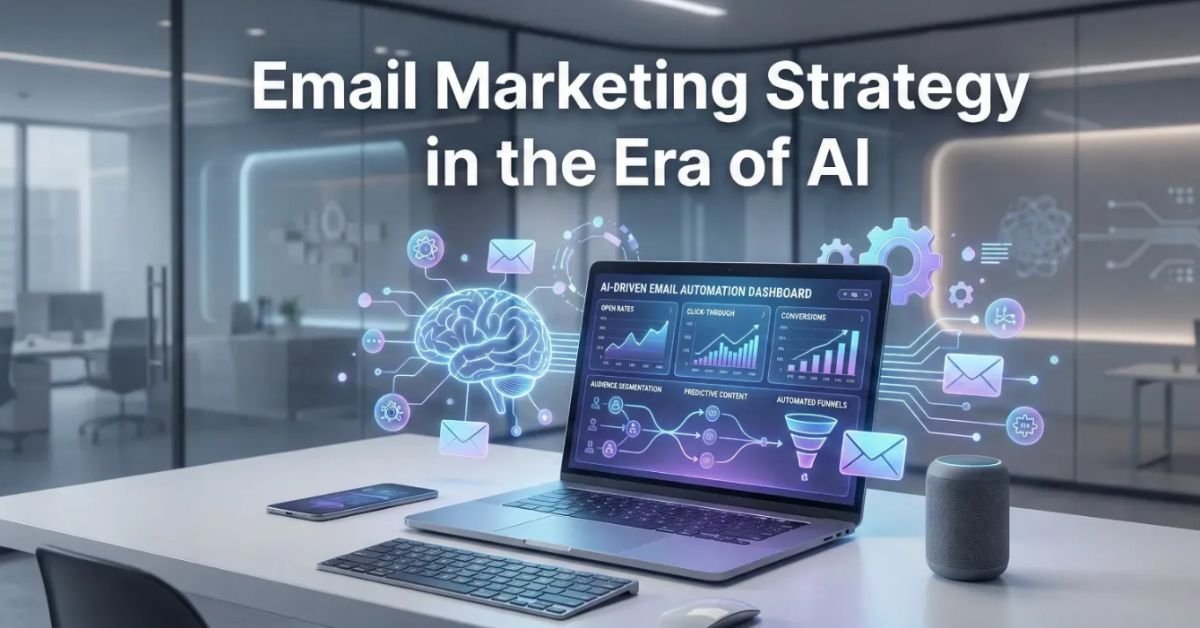
Email marketing in 2026 is not failing.
What’s failing is the way most marketers are still using it.
Inbox competition is higher than ever. Spam filters are smarter. Users have zero patience for irrelevant emails. If your email strategy hasn’t evolved with AI, user intent, and privacy expectations, your campaigns are already underperforming.
This is exactly why marketers need a clear, modern email marketing strategy instead of random campaigns.
In this blog, you’ll learn 7 email marketing strategies that actually work in 2026. These strategies are not theoretical. They are practical, execution-focused, and designed to help marketers improve engagement, conversions, and long-term ROI.
Before diving into the strategies, let’s quickly understand why email marketing still matters.
Why Email Marketing Still Matters in 2026
Many marketers assume that social media, paid ads, or AI search will replace email. That assumption is flawed.
Email marketing still matters because:
- You own your email list (no algorithm control)
- Email supports every stage of the funnel
- AI has made email personalization more powerful than ever
- Email plays a key role in lead nurturing and repeat conversions
However, email marketing only works when it’s strategic. Random emails, bulk blasts, and outdated automation do more harm than good.
Now let’s break down the 7 email marketing strategies that will work in 2026 and explain why each one matters.
The 7 Email Marketing Strategies That Will Work in 2026
The following strategies are designed specifically for modern marketers who want results, not just open rates.
Each strategy focuses on user intent, relevance, and trust, which are the core pillars of successful email marketing in 2026.
1. Hyper-Personalization Using AI and First-Party Data
This is the foundation of email marketing in 2026.
Personalization is no longer about adding a name in the subject line. Modern personalization is based on user behavior and intent, powered by first-party data and AI.
In 2026, marketers personalize emails using:
- Pages visited on the website
- Previous email clicks
- Products or services viewed
- Content consumption patterns
- Purchase or inquiry history
AI tools help analyze this data and deliver emails that feel relevant, timely, and useful.
Why this strategy works:
People respond to emails that feel written for them, not to them.
Important mistake to avoid:
Sending the same email to your entire list kills engagement and damages deliverability.
2. Intent-Based Email Segmentation Instead of Demographics
This is where most marketers go wrong.
Demographic segmentation (age, gender, location) is weak and unreliable in 2026.
Intent-based segmentation is what actually drives conversions.
Intent-based segmentation focuses on:
- What action the user took
- What content they engaged with
- How close they are to making a decision
For example:
- A user visiting your pricing page needs reassurance, not education
- A blog reader needs value, not a sales pitch
- An inactive subscriber needs re-engagement, not promotions
Why this strategy works:
Intent tells you what the user wants right now. Demographics don’t.
3. Automation Funnels That Feel Human, Not Robotic
Automation is essential in 2026, but bad automation ruins trust.
Effective email automation includes:
- Welcome email sequences
- Lead nurturing workflows
- Follow-ups after inquiries
- Re-engagement campaigns for inactive users
What has changed in 2026 is how automation is executed:
- Fewer emails
- Better spacing
- Natural, conversational tone
- Clear value in every email
Automation should feel like a helpful human following up, not a system pushing messages.
4. AI-Assisted Email Content Optimization
AI is deeply integrated into email marketing in 2026, but smart marketers know its limits.
AI is best used for:
- Subject line testing
- Predicting open and click behavior
- Optimizing send times
- Drafting initial content ideas
However, fully AI-written emails often sound generic and lack trust.
Why this strategy works:
AI improves decisions, while humans maintain authenticity.
The best-performing emails in 2026 are AI-assisted but human-edited.
5. Interactive and Value-Driven Email Content
In 2026, promotional emails are ignored.
Emails that perform well are:
- Short and focused
- Interactive
- Educational or problem-solving
Examples of high-performing formats:
- One-question emails
- Polls and quick feedback emails
- Short insights or tips
- Mini case studies
- Emails that encourage replies
Why this strategy works:
Engagement signals tell inbox providers that your emails are valuable, improving deliverability.
Email is no longer a one-way broadcast channel. It’s a conversation.
6. Privacy-First and Trust-Based Email Marketing
Privacy is a core expectation in 2026, not a legal checkbox.
Users expect:
- Clear consent
- Transparent communication
- Easy unsubscribe options
- Control over email preferences
Ignoring privacy doesn’t just risk penalties, it destroys your sender reputation.
Why this strategy works:
Trust-based email marketing leads to higher engagement, better inbox placement, and long-term list growth.
Short-term shortcuts never scale.
7. Email Analytics That Focus on Business Impact
In 2026, meaningful email analytics focus on:
- Revenue per subscriber
- Conversion-assisted sales
- Funnel movement
- Customer retention
Email marketing success should be measured by business outcomes, not surface-level numbers.
How Marketers Can Implement These Strategies Successfully
Common execution problems include:
- Poor segmentation logic
- Weak automation setup
- Inconsistent content
- No CRM or analytics integration
- Lack of long-term strategy
Email marketing in 2026 requires a structured approach, combining strategy, technology, and content.
This is where many businesses struggle to execute on their own.
Need Help With Email Marketing?
If you want expert help with email marketing strategy, automation, personalization, and performance optimization, Indiadigitalagency provides professional email marketing services.
Businesses looking to improve lead nurturing, engagement, and conversions can approach their team to build result-driven email marketing campaigns.
Conclusion
Email marketing in 2026 is not about sending more emails.
It’s about sending relevant, timely, and trustworthy emails.
Marketers who adapt to intent-based strategies, AI-powered optimization, and privacy-first practices will continue to see strong ROI. Those who don’t will keep blaming the channel instead of fixing their execution.