E-Commerce Security: Importance, Common Threats, Issues & Types
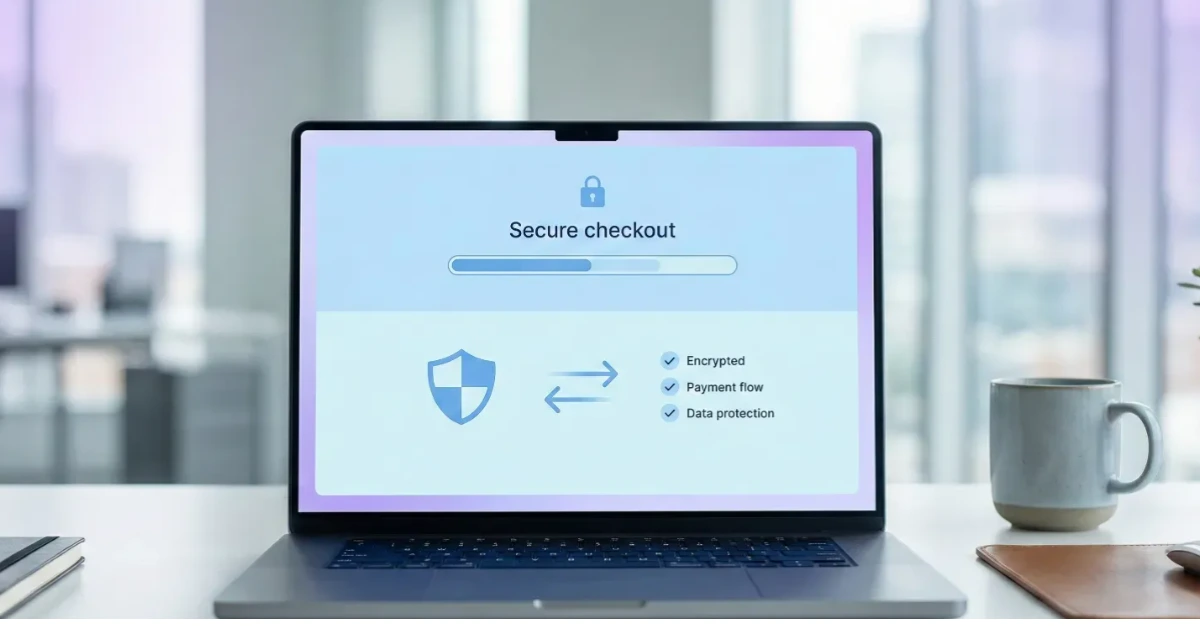
Most online business owners don’t think seriously about e commerce security when they launch their store. The focus is usually on design, products, ads, and sales. Security comes much later, often after a payment issue, a hacked admin panel, or a warning email from a customer.
In real projects, security problems usually show up quietly. A few fake orders. Sudden chargebacks. Customer complaints about suspicious emails. These are early signs that something is off. By the time a business realizes it, damage is already done.
E commerce security is not just about stopping hackers. It’s about protecting day-to-day business operations, customer trust, and revenue. If your website accepts payments or stores customer data, security is not optional, it’s part of running the business.
What Is e Commerce Security?
In simple terms, e commerce security is everything that keeps your online store from being misused. That includes protecting customer logins, payment details, admin access, and the systems that process orders.
It’s not one tool or plugin. It’s a combination of small decisions—how payments are handled, how data is stored, how access is managed, and how quickly issues are detected.
From experience, most security problems don’t come from “advanced hacking.” They come from:
Importance of E Commerce Security
Many businesses treat security as an expense. In reality, e commerce security protects revenue.
When payment fraud increases, gateways raise flags. When chargebacks rise, accounts get restricted. When customer data leaks, trust drops, and ads stop converting. These are not technical issues, they are business problems.
Strong e commerce security helps businesses:
Common E Commerce Security Threats
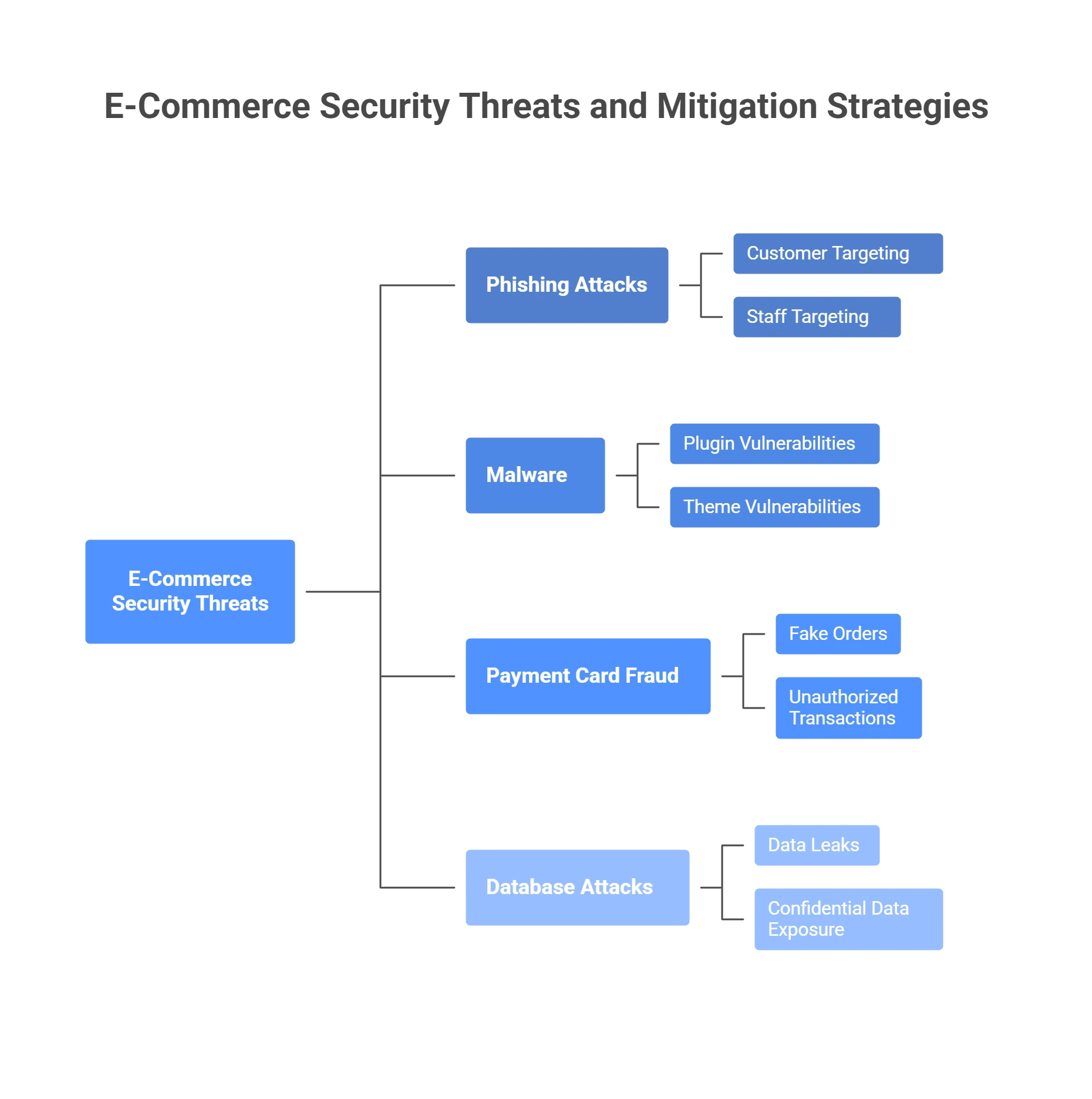
Phishing Attacks Targeting Customers and Staff:
Phishing is one of the most common e commerce security threats. Customers receive fake emails that look like order updates or refund messages. Employees receive fake login requests.
These attacks don’t break your website directly, but they damage your brand and customer trust.
Malware Through Plugins and Themes
In many real cases, malware enters an e commerce site through poorly maintained plugins or pirated themes. Once inside, it can redirect users, inject spam pages, or steal session data.
Payment Card Fraud and Fake Orders
This is where most businesses feel the impact. Stolen card details are used to place orders, which later turn into chargebacks. Too many chargebacks can get a merchant account suspended.
Database Attacks and Data Leaks
Weak database security can expose customer information. Even if no money is stolen, data leaks create legal and reputational risks.
What Are the Real Security Issues of E Commerce?
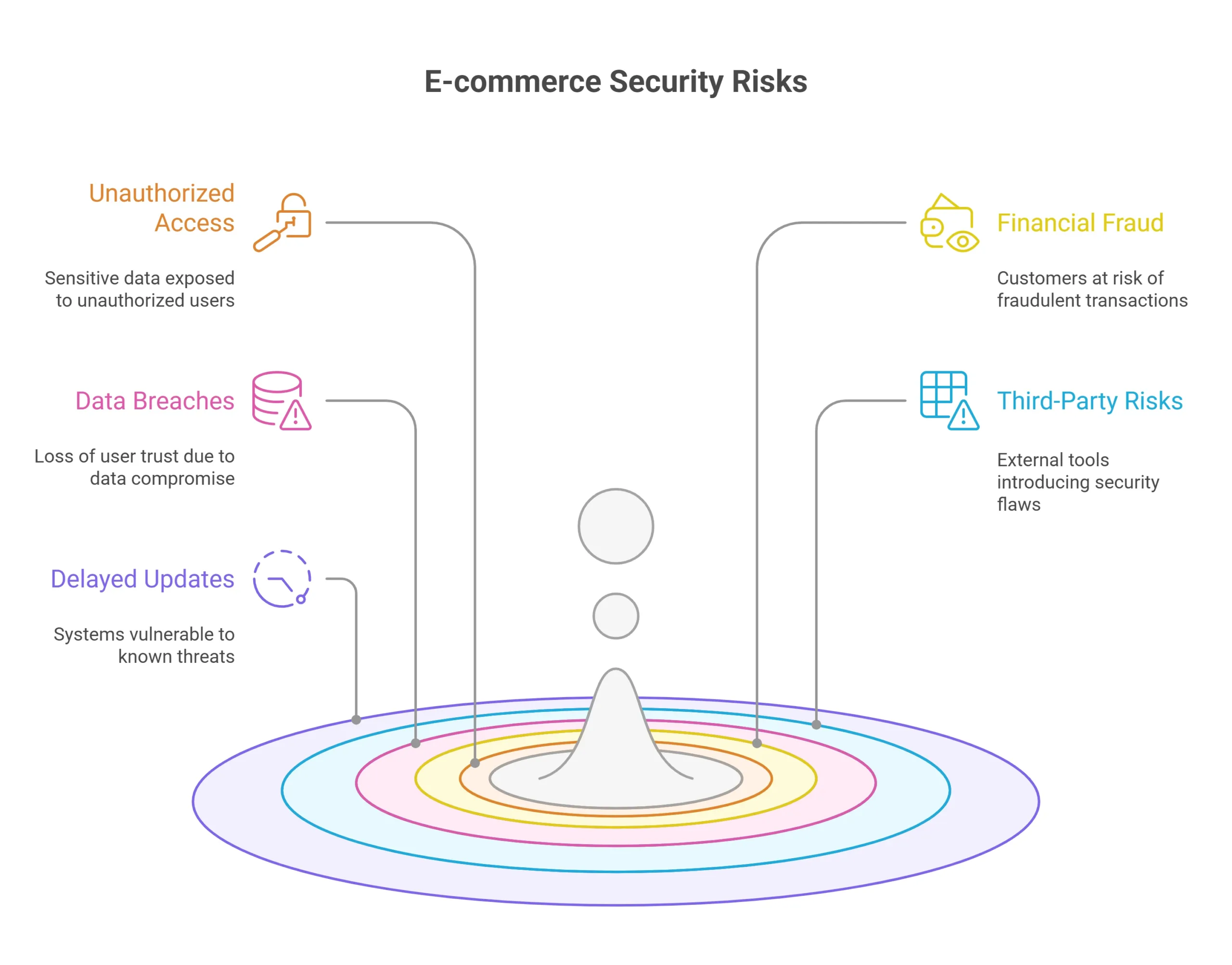
Most security issues of e commerce are not caused by complex attacks. They are caused by gaps in basic setup and maintenance.
Weak Access Control
Too many people have admin access. Old employee accounts remain active. Passwords are reused across tools.
Insecure or Cheap Payment Solutions
Some businesses choose payment systems based only on fees, ignoring compliance and security standards.
Poor Data Handling
Customer data is stored longer than necessary, often without proper encryption or access restrictions.
Over-Reliance on Third-Party Tools
Every extra plugin increases risk. Many security incidents start with third-party integrations.
Delayed Updates
Updates are postponed because “nothing is broken.” Unfortunately, attackers target exactly these known weaknesses.
Types of E-Commerce Security
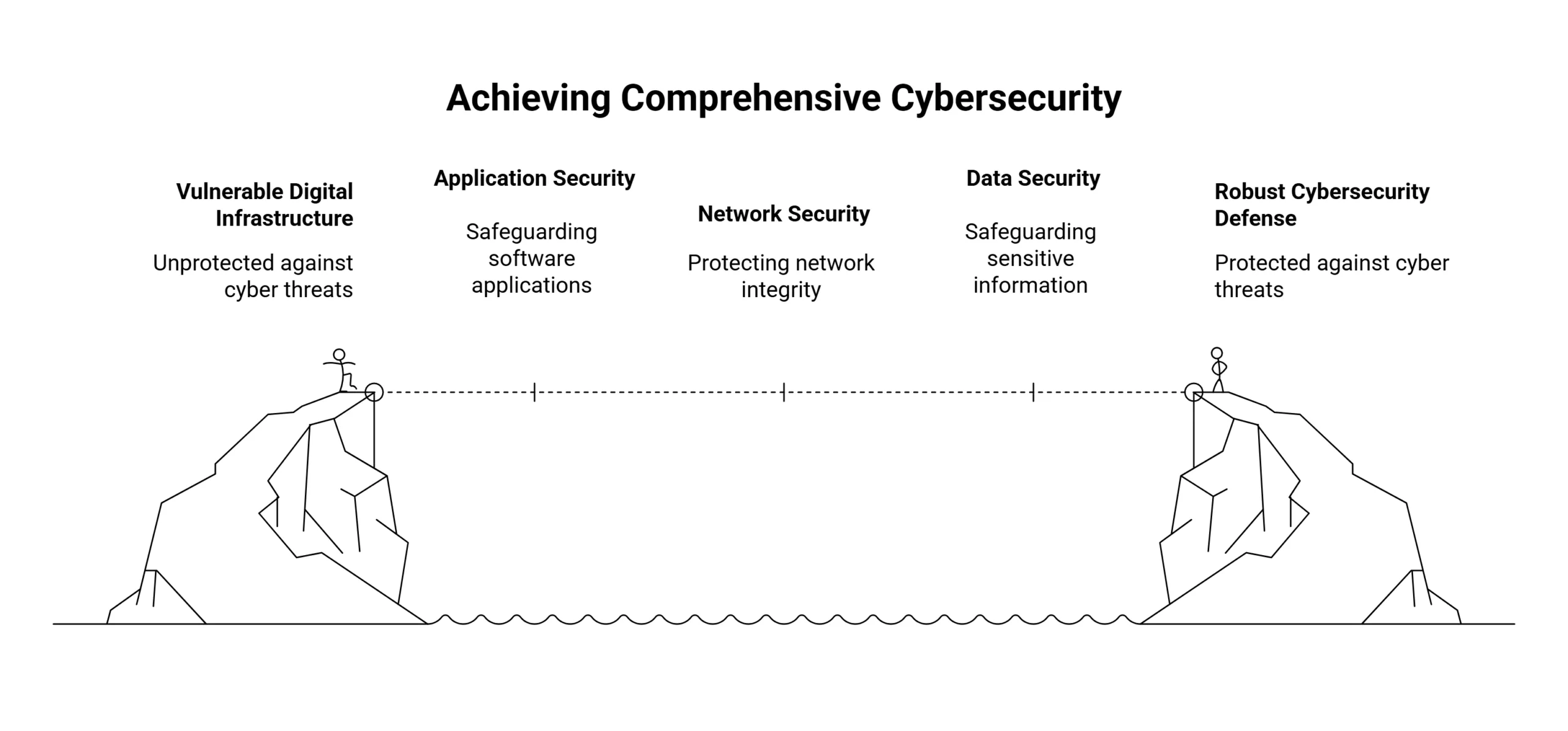
E-commerce security involves multiple layers of protection to keep online stores, customer data, and transactions safe. Below are the key types of e-commerce security every online business should understand and implement.
Application Security
Application security focuses on protecting the ecommerce website or mobile app from vulnerabilities and cyberattacks. This includes securing shopping carts, login forms, product pages, and admin panels from threats like SQL injection, cross-site scripting (XSS), and malware. Regular updates, secure coding practices, and web application firewalls (WAFs) help strengthen application security.
Network Security
Network security protects the communication between users, servers, and payment systems. It prevents unauthorized access, hacking attempts, and data interception during transactions. Firewalls, intrusion detection systems (IDS), secure Wi-Fi networks, and DDoS protection are commonly used to safeguard e-commerce networks.
Data Security
Data security ensures that sensitive customer information, such as personal details, addresses, and login credentials, is protected from breaches. This is achieved through data encryption, secure storage, access controls, and regular backups. Strong data security helps businesses comply with privacy regulations and maintain customer trust.
Payment Security
Payment security focuses on protecting online transactions and preventing payment fraud. It involves using secure payment gateways, PCI DSS compliance, tokenization, and encryption to safeguard credit card and digital wallet data. Strong payment security reduces chargebacks and ensures safe and smooth checkout experiences.
Operational Security
Operational security refers to the internal processes and policies that protect e-commerce operations. This includes managing employee access, securing admin accounts, monitoring system activity, and training staff on cybersecurity best practices. Limiting access based on roles helps reduce insider threats and human errors.
Cloud Security
Many e-commerce platforms rely on cloud hosting, making cloud security essential. Cloud security protects stored data, applications, and services from unauthorized access and breaches. Measures such as secure cloud configurations, identity and access management (IAM), encryption, and regular audits help keep cloud-based e-commerce platforms secure and scalable.
Solutions to Security Issues of E-Commerce
| Security Issue | Solution | How It Helps |
|---|---|---|
| Data interception | SSL certificates & HTTPS | Encrypts data between users and the website, preventing data theft |
| Payment fraud | Secure, PCI DSS–compliant payment gateways | Protects card details using encryption and tokenization |
| Weak login security | Strong passwords & Multi-Factor Authentication (MFA) | Prevents unauthorized access to customer and admin accounts |
| Software vulnerabilities | Regular platform, plugin & theme updates | Fixes known security flaws and reduces attack risks |
|
Web-based attacks (SQLi, XSS) |
Web Application Firewall (WAF) | Blocks malicious traffic and common attack attempts |
| Data breaches | Data encryption (at rest & in transit) | Makes stolen data unreadable and unusable |
| Hidden vulnerabilities | Regular security audits & penetration testing | Identifies weaknesses before hackers exploit them |
| Malware & ransomware | Malware scanning & regular backups | Detects threats early and ensures quick recovery |
| Insider threats | Role-based access control | Limits employee access to only necessary data |
| API & third-party risks | Secure APIs & trusted integrations | Prevents data leaks from external services |
| Undetected attacks | Real-time monitoring & intrusion detection | Enables quick threat detection and response |
| Phishing & human errors | Employee & customer security awareness | Reduces risks caused by social engineering |
| Security incidents | Incident response plan | Minimizes downtime and financial damage |
| Legal & compliance risks | PCI DSS, GDPR & security standards compliance | Ensures data protection and avoids penalties |
Conclusion
E commerce security is no longer optional for online businesses. With increasing cyber threats, protecting customer data, payment information, and transaction integrity has become a basic requirement for running a successful e-commerce store. A secure e-commerce system not only prevents financial loss but also builds long-term customer trust and brand credibility.
If you want to build or maintain a secure e-commerce website with the right security practices in place, IDA (India Digital Agency) can help you. You can get in touch with us to discuss secure e-commerce website development, maintenance, or security-focused improvements tailored to your business needs.